The volatility of the US Treasury 5-Year rate (US_TREASURY_5Y) is a critical factor for risk management and trading strategies in the financial markets. Understanding the fluctuations in this rate can provide insights into economic conditions, investor sentiment, and potential future movements in interest rates. This blog post will delve into the analysis of the US Treasury 5-Year rate volatility, utilizing the Interest Rates API to extract relevant data and perform comprehensive analyses.
Understanding US Treasury 5-Year Rate Volatility
The US Treasury 5-Year rate is a benchmark interest rate that reflects the yield on U.S. government bonds with a maturity of five years. This rate is influenced by various factors, including economic indicators, Federal Reserve policies, and market sentiment. Volatility in this rate can indicate uncertainty in the market, affecting investment decisions and risk assessments.
To measure the volatility of the US Treasury 5-Year rate, we can utilize the /fluctuation endpoint of the Interest Rates API. This endpoint provides change statistics over a specified date range, including the start and end values, percentage change, and the highest and lowest rates during that period.
Using the /fluctuation Endpoint
To analyze the fluctuations in the US Treasury 5-Year rate, we can make a GET request to the /fluctuation endpoint. Below is an example of how to retrieve this data:
curl "https://interestratesapi.com/api/v1/fluctuation?start=2025-05-19&end=2026-05-19&symbols=US_TREASURY_5Y&api_key=YOUR_KEY"The expected JSON response will provide valuable insights into the rate's performance over the specified period:
{
"success": true,
"rates": {
"US_TREASURY_5Y": {
"start_date": "2025-05-19",
"end_date": "2026-05-19",
"start_value": 5.50,
"end_value": 5.33,
"change": -0.17,
"change_pct": -3.09,
"high": 5.50,
"low": 5.25
}
}
}
In this example, the US Treasury 5-Year rate started at 5.50% and ended at 5.33%, indicating a decrease of 0.17% over the specified period. The high and low values provide additional context for understanding the rate's volatility.
Monthly Candlestick Patterns with /ohlc
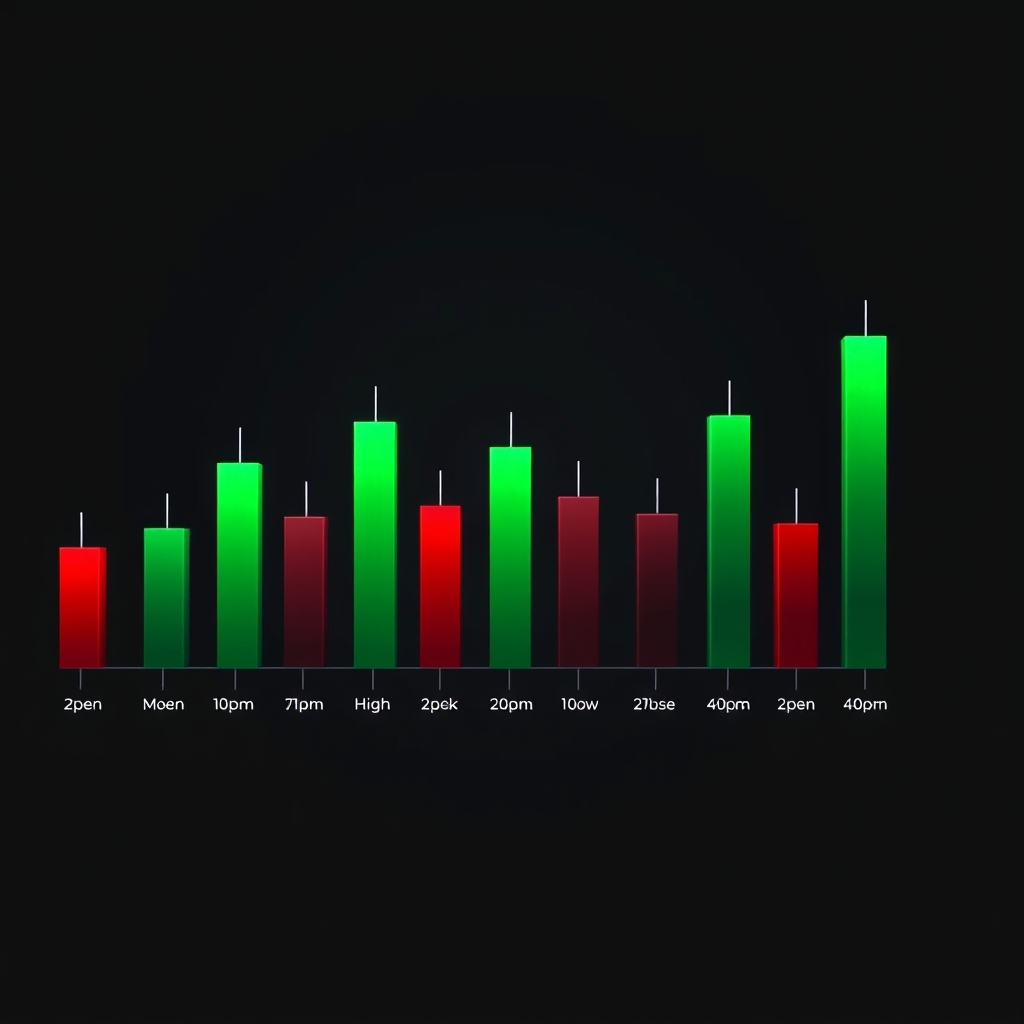
To further analyze the US Treasury 5-Year rate, we can utilize the /ohlc endpoint to retrieve Open, High, Low, and Close (OHLC) data. This data is essential for visualizing the rate's movements over time and identifying trends.
Here’s how to make a request to the /ohlc endpoint:
curl "https://interestratesapi.com/api/v1/ohlc?symbols=US_TREASURY_5Y&period=monthly&start=2025-05-19&end=2026-05-19&api_key=YOUR_KEY"The response will include monthly candlestick data, which can be interpreted as follows:
{
"success": true,
"period": "monthly",
"start_date": "2025-05-19",
"end_date": "2026-05-19",
"rates": {
"US_TREASURY_5Y": [
{
"period": "2025-01",
"open": 5.50,
"high": 5.50,
"low": 5.33,
"close": 5.33,
"data_points": 23
}
]
}
}
In this response, the OHLC data for January 2025 shows that the rate opened at 5.50%, reached a high of 5.50%, and closed at 5.33%. This information is crucial for traders and analysts looking to identify patterns and make informed decisions based on historical data.
Time Series Analysis with /timeseries
To visualize the movements of the US Treasury 5-Year rate over time, we can use the /timeseries endpoint. This endpoint allows us to retrieve daily rates between two specified dates, enabling us to plot the rate movements and calculate rolling volatility.
Here’s an example of how to request time series data:
curl "https://interestratesapi.com/api/v1/timeseries?start=2025-05-19&end=2026-05-19&symbols=US_TREASURY_5Y&api_key=YOUR_KEY"The expected JSON response will provide daily rates:
{
"success": true,
"base": "USD",
"start_date": "2025-05-19",
"end_date": "2026-05-19",
"rates": {
"US_TREASURY_5Y": {
"2025-01-02": 5.33,
"2025-01-03": 5.33,
"2025-01-06": 5.33
}
},
"frequencies": {
"US_TREASURY_5Y": "daily"
},
"currencies": {
"US_TREASURY_5Y": "USD"
}
}
With this data, we can calculate rolling volatility using Python and the Pandas library. For example:
import pandas as pd

# Sample data
data = {
'2025-01-02': 5.33,
'2025-01-03': 5.33,
'2025-01-06': 5.33
}

# Create a DataFrame
df = pd.DataFrame(list(data.items()), columns=['Date', 'Rate'])
df['Date'] = pd.to_datetime(df['Date'])
df.set_index('Date', inplace=True)

# Calculate rolling volatility
rolling_volatility = df['Rate'].rolling(window=5).std()
print(rolling_volatility)
This code snippet demonstrates how to calculate the rolling standard deviation of the US Treasury 5-Year rate, providing insights into its volatility over time.
Practical Applications of Interest Rate Data
The data retrieved from the Interest Rates API can be utilized in various practical applications, including:
- Rate-Alert Systems: Developers can create systems that alert users when the US Treasury 5-Year rate reaches a certain threshold, enabling timely investment decisions.
- Value at Risk (VaR) Models: Financial analysts can incorporate interest rate data into their VaR models to assess potential losses in investment portfolios.
- Central Bank Meeting Event Analysis: By analyzing rate movements before and after central bank meetings, analysts can gauge market reactions and adjust strategies accordingly.
These applications highlight the importance of having access to accurate and timely interest rate data, which can significantly impact investment strategies and risk management practices.
Conclusion
In conclusion, the US Treasury 5-Year rate is a vital indicator of economic conditions and market sentiment. By leveraging the Interest Rates API, developers and financial analysts can access comprehensive data on this rate, enabling them to perform detailed analyses and make informed decisions. Whether through fluctuation analysis, OHLC data, or time series analysis, the insights gained from this data can enhance risk management strategies and trading decisions.
For more information and to explore the features of the Interest Rates API, visit Try Interest Rates API, Explore Interest Rates API features, and Get started with Interest Rates API.