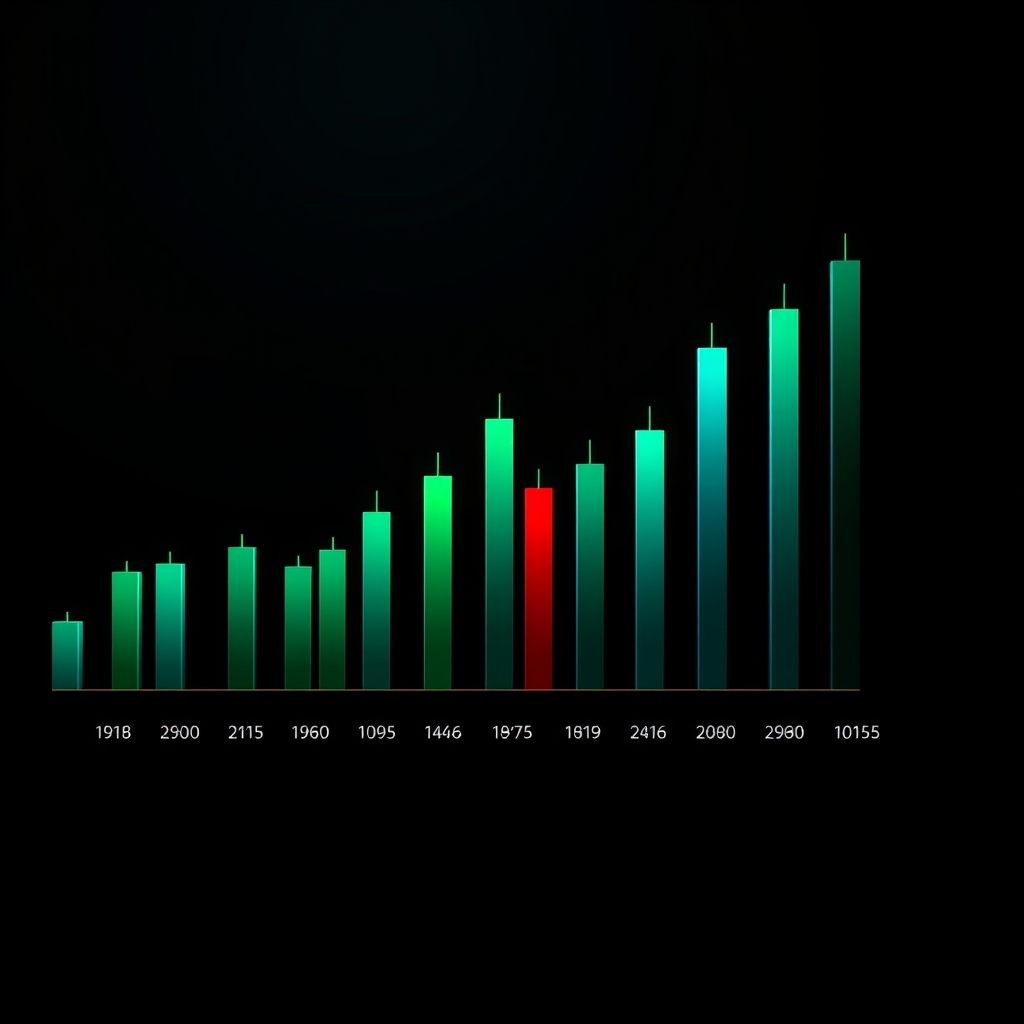
In the world of finance, interest rates play a crucial role in shaping economic conditions, influencing everything from consumer spending to investment strategies. Among the various interest rates, the Bank of England's Official Bank Rate (BOE_BANK_RATE) stands out as a key benchmark for monetary policy in the UK. Understanding the volatility and fluctuations of this rate is essential for risk management, trading strategies, and economic forecasting. This blog post will delve into the analysis of BOE_BANK_RATE volatility, utilizing the Interest Rates API to provide developers, economists, and financial analysts with the tools needed to effectively analyze and interpret interest rate data.
Understanding BOE_BANK_RATE Volatility
The BOE_BANK_RATE is the interest rate at which the Bank of England lends to financial institutions. It serves as a benchmark for various financial products, including mortgages and loans. The volatility of this rate can significantly impact financial markets, influencing borrowing costs and investment decisions. For developers building fintech applications, understanding this volatility is crucial for creating effective risk management tools and trading algorithms.
To measure the fluctuations in the BOE_BANK_RATE, we can utilize the /fluctuation endpoint of the Interest Rates API. This endpoint provides change statistics over a specified date range, allowing us to analyze the rate's behavior over time.
Using the /fluctuation Endpoint
The /fluctuation endpoint requires a start date, an end date, and the symbol for the interest rate we want to analyze. The response includes key metrics such as the start value, end value, change, change percentage, high, and low values during the specified period.
Here’s how to make a request to the /fluctuation endpoint:
curl "https://interestratesapi.com/api/v1/fluctuation?start=2025-05-26&end=2026-05-26&symbols=BOE_BANK_RATE&api_key=YOUR_KEY"Example JSON response:
{
"success": true,
"rates": {
"BOE_BANK_RATE": {
"start_date": "2025-05-26",
"end_date": "2026-05-26",
"start_value": 5.50,
"end_value": 5.33,
"change": -0.17,
"change_pct": -3.09,
"high": 5.50,
"low": 5.25
}
}
}
In this example, we can see that the BOE_BANK_RATE started at 5.50% and ended at 5.33%, indicating a decrease of 0.17%. The change percentage of -3.09% reflects the rate's volatility during this period. Such insights are invaluable for developers creating applications that require real-time interest rate data for risk assessment and decision-making.
Analyzing Monthly Candlestick Patterns with /ohlc
To further understand the behavior of the BOE_BANK_RATE, we can utilize the /ohlc endpoint, which provides Open, High, Low, and Close (OHLC) data for the interest rate. This data is essential for visualizing trends and patterns in the rate over time.
The OHLC data can be particularly useful for traders and analysts looking to identify potential entry and exit points based on historical performance. The request to the /ohlc endpoint can be made as follows:
curl "https://interestratesapi.com/api/v1/ohlc?symbols=BOE_BANK_RATE&period=monthly&start=2025-05-26&end=2026-05-26&api_key=YOUR_KEY"Example JSON response:
{
"success": true,
"period": "monthly",
"start_date": "2025-05-26",
"end_date": "2026-05-26",
"rates": {
"BOE_BANK_RATE": [
{
"period": "2025-01",
"open": 5.50,
"high": 5.50,
"low": 5.33,
"close": 5.33,
"data_points": 23
}
]
}
}
In this response, we can see the monthly candlestick data for the BOE_BANK_RATE. The "open" value indicates the rate at the beginning of the month, while the "close" value shows the rate at the end of the month. The "high" and "low" values provide insight into the range of the rate during that period. This information is crucial for traders looking to make informed decisions based on historical trends.
Time Series Analysis with /timeseries
Another powerful feature of the Interest Rates API is the /timeseries endpoint, which allows users to retrieve a series of interest rate data between two specified dates. This data can be used to plot rate movements and analyze trends over time.
To request time series data for the BOE_BANK_RATE, the following API call can be made:
curl "https://interestratesapi.com/api/v1/timeseries?start=2025-05-26&end=2026-05-26&symbols=BOE_BANK_RATE&api_key=YOUR_KEY"Example JSON response:
{
"success": true,
"base": "USD",
"start_date": "2025-05-26",
"end_date": "2026-05-26",
"rates": {
"BOE_BANK_RATE": {
"2025-01-02": 5.33,
"2025-01-03": 5.33,
"2025-01-06": 5.33
}
},
"frequencies": {
"BOE_BANK_RATE": "daily"
},
"currencies": {
"BOE_BANK_RATE": "USD"
}
}
This response provides daily rates for the BOE_BANK_RATE over the specified period. Developers can use this data to create visualizations or perform statistical analyses, such as calculating rolling volatility using Python's pandas library:
import pandas as pd

# Sample data
data = {
'date': ['2025-01-02', '2025-01-03', '2025-01-06'],
'rate': [5.33, 5.33, 5.33]
}

df = pd.DataFrame(data)
df['date'] = pd.to_datetime(df['date'])
df.set_index('date', inplace=True)

# Calculate rolling volatility
rolling_volatility = df['rate'].rolling(window=3).std()
print(rolling_volatility)
This code snippet demonstrates how to calculate the rolling standard deviation of the BOE_BANK_RATE, providing insights into its volatility over time. Such analyses are critical for risk management and financial forecasting.
Practical Applications of Interest Rate Data
The insights gained from analyzing the BOE_BANK_RATE can be applied in various practical scenarios:
- Rate-Alert Systems: Developers can create applications that notify users when the BOE_BANK_RATE reaches a certain threshold, allowing them to make timely financial decisions.
- Value at Risk (VaR) Models: Financial analysts can incorporate BOE_BANK_RATE data into their VaR models to assess potential losses in investment portfolios under different market conditions.
- Central Bank Meeting Event Analysis: By analyzing historical BOE_BANK_RATE data around central bank meetings, analysts can identify patterns and predict future rate changes based on economic indicators.
These applications highlight the importance of having access to accurate and timely interest rate data, which can be efficiently obtained through the Interest Rates API.
Conclusion
In conclusion, understanding the volatility and fluctuations of the BOE_BANK_RATE is essential for effective risk management and trading strategies. By leveraging the powerful features of the Interest Rates API, developers and financial analysts can gain valuable insights into interest rate behavior, enabling them to make informed decisions. Whether it's through analyzing fluctuations, examining OHLC data, or conducting time series analysis, the tools provided by the API are indispensable for anyone working in the financial sector.
For more information on how to get started with the Interest Rates API, explore its features, and integrate it into your applications, visit the official documentation today!